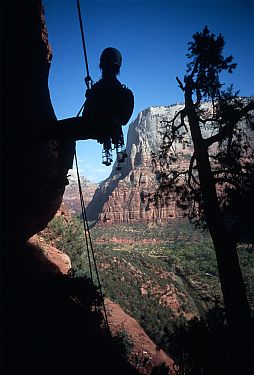
The 2014 North American Adventure Racing Series will include 80 races from coast to coast in the U.S. along with a collection of races in Canada. The platform will include Regional Championships in Northeast, Southeast, Southwest, Midwest, West, and Canada. NAARS is currently accepting bids for each of the Regional Championships for the 2014 season. Series Founder Doug Crytzer says he is “Thrilled to be working with Andy and his organization to offer adventure racers a National Championship in a location that will challenge and “wow” participants with its beauty and terrain.”
Tuesday, September 3, 2013
2014 NAARS Championship Race Location Announced
The 2014 North American Adventure Racing Series will include 80 races from coast to coast in the U.S. along with a collection of races in Canada. The platform will include Regional Championships in Northeast, Southeast, Southwest, Midwest, West, and Canada. NAARS is currently accepting bids for each of the Regional Championships for the 2014 season. Series Founder Doug Crytzer says he is “Thrilled to be working with Andy and his organization to offer adventure racers a National Championship in a location that will challenge and “wow” participants with its beauty and terrain.”
Thursday, June 13, 2013
Meet the RD: 180 Adventure
Organization: 180 Adventure
Race: Stubborn Mule Adventure Race – 30-Hr
Race Director: Paula Waite
Tomahawk, Wisconsin – June 9, 2013 – What's tougher
than a Muddy Buddy and more fun than a Tough Mudder? How about 30 hours of
non-stop biking, running, and paddling with only a map, compass, and your
team's wits to guide you?!
The Stubborn Mule Adventure Race will test
competitors' mettle as they hunt for hidden checkpoints around the county.
“Teams will cover from 50 to over 100 miles, entirely under their own power,”
says Paula Waite, race director and course designer for 180 Adventure. Those competing
in the 30-hour expedition event will race through the night – fighting the
“sleep monsters” while navigating the north woods terrain in the dark. Racers
in the 12-hour event may not have to fight to stay awake through their race,
but it isn't a walk in the park either. “Success in adventure racing is not
just about being the fastest bikers, runners and paddlers. To win, teammates
must work well together and choose their routes carefully.” GPS devices are not
allowed; teams must rely on their own skills to find their way.
Stubborn Mule is expected to draw over 150
participants. “We have a great mix: many brand new, never-raced-before teams
all the way up to teams who've competed on the national level. We have folks coming
in from more than a dozen states and even have an international team flying
in”. The race begins at 6 a.m., Saturday, June 29 in a to-be-announced location
near Tomahawk. Why so secret? Part of the challenge of adventure racing is
route-finding and quick decision making. Teams won't know the starting location
until one week prior to race day, and they find out where they are headed until
they receive their maps at the starting line. At that point they must plan and
chart their routes all under the pressure of the ticking clock.
How did you get into adventure race production?
Midwest adventure racers lost two Wisconsin-based
race organizations about 5-6 years ago which meant 3-4 fewer races in the state
each year. I had been racing since 2000, loved the sport and the AR family, and
was always intrigued by the idea of hosting an adventure race. Ok, maybe I was
a little obsessed... The decline in races worried me and there were rumblings
in the local AR community that the sport was dying. To me, it meant somebody
needed to step up and keep the sport alive and well. That is when 180 Adventure
and Stubborn Mule were born. As we enter our 4th season of AR production,
I still am obsessed, though I like to call it passionate!
What are the biggest challenges you face as an RD in
your area?
The biggest challenge? Keeping the race course size
manageable! There are so many beautiful spots here that it is difficult not to
overextend by trying to fit them all into each event. When I'm struggling to
figure out how to incorporate a fantastic paddle section into the race, for
example, I have to keep telling myself, save some of it for next year!
On a more serious note, I think a challenge for our
sport as whole is awareness and involvement among the masses. Everyone knows
what a mud run is, but when I mention “adventure racing” to most people, I
receive a puzzled look. Muddy Buddy can generate so much revenue while
adventure races struggle to make ends meet, much less share some of those funds
with a charity as much as we'd like to. Why? One of the issues for me, and
maybe for all of us, is answering that question. Or maybe first, do we want to
be bigger?
What can participants expect...that you're willing
to share?
We do like to be secret about our courses don't we?
This year, I've seen more wildlife than ever when working on the course –
bears, porcupines, and eagles! We are really taking teams into some pristine
locations at Stubborn Mule. Expect challenging topography, scenic paddling,
epic mountain biking and the best volunteer crew around!
What is the biggest change from last year's race?
Every year we work to tune the race and our
operations to be the best they can be. We survey racers after every event and
take their feedback very seriously. Last year we heard from several teams that
the 2012 Mule was “the best race ever”. I'm not sure how much we want to change
from that!
Actually, one big change is around our series
involvement. We are VERY excited to partner with NAARS which means we are
bringing an incredibly generous prize package to the racers this year – there
will be far more on the prize table than ever before!
5. What advice do you have for training or just from
general experience in the AR world?
Adventure racing is a roller coaster. Enjoy the
ride!
Thursday, May 16, 2013
Meet the RD: Pangea Adventure Racing
This sure is a busy weekend for NAARS with 5 races being held this Saturday! Pangea Adventure Racing will be hosting the South Eastern Regional Championship with the 30 hour Atomic AR. 500 points are up for grabs, so this could be a critical race for the competing teams.
The Atomic AR is taking place in Blue Ridge, GA and is building on the success of last year's race by tapping into new territory! The 30 hour race will prove to be an exciting challenge for the elite athletes and will make for a competitive finish.
We recently talked to the Race director, Greg Owens, about his love and involvement with the sport of Adventure Racing, and here's what he had to say.
1. How did you get into adventure race production?
In 2003, I did my first AR which was 18 hours and placed at the bottom of the leader board and have been addicted to this "get outdoors & play in the woods sport" ever since. I started Pangea Adventure Racing in the later part of 2007 as it appeared that AR in Florida was dwindling away. Most of our events have an intro level event that ranges from 3 to 5 hours and has helped to introduce many to AR.
2. What are the biggest challenges you face as a RD in your area?
Permitting is many times a challenge with new venues. Reaching new prospects is also challenging as they feel that AR's are beyond them and prefer to go participate in the Mud/Obstacle races sweeping the nation. Logistics with canoes early on was a issue as was volunteers though not so much an issue anymore.
3. What can participants expect...that you're willing to share?
Great views, mountains, single track biking, limited white water paddling in canoes, challenging land navigation.
4. What is the biggest change from last year's race?
With the date of the race being moved back one week, many new lands usually reserved for hunting become available. And no nighttime white water paddling.
5. What advice do you have for training or just from general experience in the AR world?
Have fun when training and train in multiple disciplines - for example do a good run followed with a nice bike ride back-to-back several times a week. Train eating the foods you plan to use during the event. Couple of weeks or further out prior to the event, train with teammates if possible for a long weekend. Not necessarily sleep deprived but a good weekend of training and include the night aspect so you are comfortable with your lights. Lastly, have a transitions plan so you can minimize time spent in TAs.
The Atomic AR is taking place in Blue Ridge, GA and is building on the success of last year's race by tapping into new territory! The 30 hour race will prove to be an exciting challenge for the elite athletes and will make for a competitive finish.
We recently talked to the Race director, Greg Owens, about his love and involvement with the sport of Adventure Racing, and here's what he had to say.
1. How did you get into adventure race production?
In 2003, I did my first AR which was 18 hours and placed at the bottom of the leader board and have been addicted to this "get outdoors & play in the woods sport" ever since. I started Pangea Adventure Racing in the later part of 2007 as it appeared that AR in Florida was dwindling away. Most of our events have an intro level event that ranges from 3 to 5 hours and has helped to introduce many to AR.
2. What are the biggest challenges you face as a RD in your area?
Permitting is many times a challenge with new venues. Reaching new prospects is also challenging as they feel that AR's are beyond them and prefer to go participate in the Mud/Obstacle races sweeping the nation. Logistics with canoes early on was a issue as was volunteers though not so much an issue anymore.3. What can participants expect...that you're willing to share?
Great views, mountains, single track biking, limited white water paddling in canoes, challenging land navigation.
4. What is the biggest change from last year's race?
With the date of the race being moved back one week, many new lands usually reserved for hunting become available. And no nighttime white water paddling.
5. What advice do you have for training or just from general experience in the AR world?
Have fun when training and train in multiple disciplines - for example do a good run followed with a nice bike ride back-to-back several times a week. Train eating the foods you plan to use during the event. Couple of weeks or further out prior to the event, train with teammates if possible for a long weekend. Not necessarily sleep deprived but a good weekend of training and include the night aspect so you are comfortable with your lights. Lastly, have a transitions plan so you can minimize time spent in TAs.
Monday, April 29, 2013
AAS Yough Xtreme 10HR Adventure Race Recap
by: TeamSOG
Start: with run prologue on Rail-Trail from foot bridge out to far side of RR bridge and back to pick up bikes.
Bike 1: Bike up Baughman to Sugarloaf Junction and CP1, then bike up Sugarloaf to Overlook (CP 2 and bike drop).
Run 1: Run down Fire Tower Road to Ramcat put-in (CP3).
Paddle: Middle Yough to Pull-out in Ohipyle (CP4).
Run 2: (The slog) Up (South) Rail Trail to re entrant vicin UTM 632300 / 4411500. Southeast (Up) reentrant to CP5 at Gaswell on Gaswell Road. Continue up reentrant to Fire Tower Road and to CP6 at overlook to pick up bikes.
Bike 2: Bike South and West on Lytle Road, picking up CP8 at reentrant/creek/deer trail South of CP6. Continue on Lytle to Sugarloaf to Ohippyle to Rail Trail to Campground and CP 9 at Cemetery in vicin of Group Campsite. Descend Kentuck to junction Jonathan Run Trail, up Jonathan Run Trail to top/road junction and CP 10. Descend Jonathan Run to Rail Trail and Rail Trail South to Finish at Wilderness Voyageurs.
Monday, April 22, 2013
TeamSOG Shenandoah Epic AR Race Report
Saturday Apr 20
10 AM
Paddling (Canoes) 32:31 3.0 mi
Race start at Goods Landing. Paddled to Seakford. All the top teams finished this leg together.
Trail Running 1:14:40 5.0 mi +1300ft
Quick trek for 3 CPs. One was at the top of the ridge. We moved fast to separate ourselves and found a shortcut to gain even more time.
11 AM
Paddling (Canoes) 1:58:19 15.0 mi
Finished the paddling leg to Low Water Bridge. Water was moving fast which was great. We were moving slow and lost some time to most teams here.
Dan and I swamped in Compton Rapids. I was swinging around to catch a line and overcompensated. Only lost about 3 minutes, just enough to dump the boat and keep going. Water felt great. Dan lost his mango though.
1 PM
Mountain Biking 5:45:38
After we completed the "challenges" we got on our bikes. (It took Rev3 15 minutes to do a challenge we did in less than 5. I would have been upset. This was pretty crucial.)
Rode over Shawl Gap to EFurnace. Then up to Strasburg Reservoir and along the Massanutten trail to Woodstock Tower and back to EFurnace.
My tow line broke 1 mile in and Dan's didn't have any bungee on it making towing hard. We resorted to pushing and shifting a lot of weight between packs.
We had two steep climbs but two pretty sweet downhills. The Massanutten trail wasn't as bad as we thought but still required quite a bit of dismounting and walking. The return trip seemed to have much better flow. We rode most of Massanutten trail with Odyssey and were right behind Rev3 the entire time but we had 1 more CP than both of them at the time. We were sneaky enough to not let Rev3 know where we were as we "hid" from them when they passed us on the way back.
I did an endo on the trail and busted the bursa sac in my left elbow. Pounded some Vitamin I and wrapped it up. Was able to finish the race without any significant pain or lack of motion.
8 PM
Trail Running 5:12:53
Technically was considered an Orienteering course but 90% of it was on trails and forest service roads. Counter clockwise seemed better because it meant going up the rocky technical trail and running down the roads. We also were able to save some time bushwhacking down to the reservoir.
We walked the entire climb. It was dark and technical and although I knew we could go faster I think the safety and recovery time was worth it. Plus I knew we would be able to run the entire second half much easier. JayXC had a slightly faster time going in the other direction but I imagine he ran quite a bit more than we did. He finished just as we were leaving on our bikes.
Thursday, March 28, 2013
Meet the RD: REV3 Adventure
Shenandoah Epic is set for Saturday April, 20th
and will surely been a fun weekend for all in attendance.
The great thing about REV3’s race is that it is truly suited
for all levels of racers – beginners and advanced. Set in the beautiful forest of Shenandoah
State Park, the race will provide wonderful scenery as teams run around
collecting as many points as possible and completing team challenges. Registration is open until April 15th,
so there is still time to get signed up and have the time of your life doing
something good for your body and mind!
Mark Harris, the race director, loves sharing his passion of
Adventure Racing and introducing people to the sport. Mark recently took some time and answered a
few questions about his role in AR- here is his story.
How did you get into adventure race production?
Both Mike Spiller and myself started putting on local
adventure races with a focus on families and getting kids outdoors
about six years ago. We both love the outdoors and have a
passion for adventure racing and being able to put on fun events that mix biking,
trail running, and navigation for youngsters was something that we enjoy
doing. With a partnership with REV3 in the past 2 years, we have been able to
reach a larger athletic audience. In the next 18-24 months we have plans
on expanding into trail running and mountain bike events. This year we
have established a new trail series and will be hosting 5k Glow Runs at
numerous cities this summer. Our dedication to quality and ensuring that we put
on fun and exciting event are our primary goals.
What are the biggest challenges you face as an RD in your area?
Safety and permitting. The safety of our competitors is
our biggest challenge and concern. By its very nature adventure racing,
mountain biking and adventure sports have inherent risks. Ensuring that
we can provide the safest environment without being overbearing is very
hard. It leads to many sleepless nights.
Being able to balance a quality course and getting the
permission from land owners, state authorities and federal authorities is challenging.
This summer we are hosting a 3.5 day race in Wyoming and permitting for the
course is a monumental tasks. We are working with over 10 agencies and
about 8-10 private land owners. Getting everything to sync up is time
consuming and mostly out of our control. Contingency plans for route
access are a necessity in the event a permit or access is revoked at the last
minute.
For any of our races, competitors can expect a fun and
challenging race that is geared toward beginner and expert racers. We
have taken part in many races that are either too hard and demoralizing or
cater only toward elite racers. We make sure that our courses can be
completed by beginners and newcomers and still provide a challenge
for the top teams in the country.
What is the biggest change from last year's race?
We have invested heavily in an ePunch system. We think
this will prove a better experience for spectators and athletes by proving
quick and accurate race updates and final results. Having the digital
systems also allows us to focus on other elements of the race rather than
tabulating and calculating scores from traditional pin punch
passports which
are very time-consuming. Our epic weekend will see 180 teams racing so
having a quick and accurate way to tabulate results is almost a
necessity. The ePunch system will help us grow our events without
timing and scoring becoming a bottle neck.What advice do you have for training or just from general experience in the AR world?
For shorter races general physical fitness is a
must. Get out on a bike and lay down some miles. Practice your
mountain biking skills and improve your technical skills through
practice.
Get the right gear. It makes all the difference especially
in longer races. 29" wheels and a hard tail bike will really help biking
efficiency. For longer races (12 hours plus) the number one thing is
nutrition. I have seen so many teams have to bail because they have not
been eating and drinking throughout the race. At 2 AM it is the hardest
thing to keep eating and drinking when your belly just feels rank. Second to
that is team chemistry. There is no point in doing this stuff if you are
not having fun.
Tuesday, March 26, 2013
Meet the RD: American Adventure Sports
After an exciting start to the The North American Adventure
Racing Series (NAARS), the series continues with the Prestige Race, the
American Adventure Sports Yough Xtreme on April 27th, 2013. This race is held in beautiful Ohiopyle State
Park in western Pennsylvania as a 5-hour (Sport Class) and the 10-hour (Elite
Class). Only the 10-hour race will count
towards the ranking points for the series.
This challenging adventure race includes mountain biking,
trail running, kayaking and orienteering for approximately 30 miles (for the
Sport Class) or 60 miles (for the Elite Class). This "sprint" race is
suitable for beginner, intermediate and advanced adventure racers and promises
you the thrill of a lifetime.
Teams of one, two, three, or four people will be trekking,
orienteering, mountain biking, kayak paddling for a combined 60+ miles.
Doug Crytzer, President and Founder of American Adventure
Sports, is the Race Director of the Yough Xtreme AR. He has been producing
high-quality, and challenging Adventure Races since he started the company in
1997. Here is part of his story.
What are the biggest challenges you face as an RD in your
area?
Definitely the weather - it's ever changing and
unpredictable. That’s why it is so important
that our athletes be prepared for any situation when competing.
What can participants expect...that you're willing to share?
Ha, ha. This is a fast tempo race that's lots of fun. Even
though it’s one of the oldest
sprint races in the country, it’s always a challenging and beautiful course.
Though the Yough is held in the same park every year, it’s
a different rac
What advice do you have for training or just from general experience in
the AR world?
In adventure racing, the fastest team doesn't always win and the slowest team doesn't always lose. You must race with your teammates, don't race your teammates - team synergy is a force multiplier. You also have to control the mental aspect of the race by avoiding the highs and lows emotionally.
e every time. The entire course changes creating a need for a
new strategy each year. What advice do you have for training or just from general experience in
the AR world?
In adventure racing, the fastest team doesn't always win and the slowest team doesn't always lose. You must race with your teammates, don't race your teammates - team synergy is a force multiplier. You also have to control the mental aspect of the race by avoiding the highs and lows emotionally.
And remember that being lost, getting a flat or swamping a
boat, doesn't mean your race is over. Train like you race. Who Dares Wins! And
of course, Body maintenance, body maintenance, body maintenance!
Subscribe to:
Posts (Atom)